How to Increase Sales Conversion Rates in Your Online Store
Getting traffic to your online store is only half the battle - turning visitors into paying customers is the real challenge. Many store owners focus heavily on driving traffic through ads, social media, or SEO, but without a well-optimized website and sales funnel, those visitors may leave without buying anything. Conversion rate optimization (CRO) is the process of improving your website, product pages, and checkout process to encourage more purchases. It’s about understanding your customers’ behavior, addressing their concerns, and making it as easy as possible for them to say “yes” to your products.
This guide covers actionable strategies to increase your sales conversion rates and grow your online business, with clear steps you can implement immediately.
Step 1: Optimize Your Product Pages
Your product pages are often the last point of decision before a purchase, so they need to provide clarity, confidence, and motivation. A well-optimized product page can significantly increase your conversions. Here’s how:
- High-quality images: Visuals are a powerful persuasion tool. Customers cannot touch or try your products online, so providing multiple high-resolution images is crucial. Include photos from different angles, close-ups of details, and lifestyle shots showing the product in use. Interactive features like zoom, 360-degree views, or short videos can make your products more tangible and appealing.
- Clear product descriptions: Avoid vague or generic descriptions. Focus on what makes your product unique and why a customer should buy it. Highlight benefits over features - explain how the product solves a problem or improves the user’s life. Breaking content into bullet points, including size charts, dimensions, and usage instructions, also helps customers quickly understand what they are buying.
- Customer reviews and ratings: Social proof matters. Displaying reviews, star ratings, and testimonials gives potential buyers confidence in your product’s quality and reliability. Consider encouraging verified buyers to leave detailed reviews or even photos of the product in use.
- Urgency and scarcity: Limited-time offers or low-stock alerts can create a sense of urgency. Simple messages like “Only 3 left in stock!” or countdown timers for special promotions can encourage visitors to make a purchase sooner rather than later. Scarcity signals often increase perceived value, motivating action.
Step 2: Improve Website Speed and Mobile Experience
A slow-loading website or poor mobile experience can undo even the most compelling product pages. Studies show that even a one-second delay in page load time can lead to significant drops in conversion rates.
- Use a reliable hosting provider: A high-quality host ensures that your website loads quickly and handles traffic spikes without crashing. Consider hosting plans optimized for e-commerce to maximize speed.
- Optimize images and scripts: Large images and heavy scripts can slow down page load times. Compress images without losing quality, use modern formats like WebP, and minimize unnecessary JavaScript or plugins.
- Make your site mobile-friendly: More than half of online shopping is done on mobile devices. Responsive design ensures your website looks great and functions properly on all screen sizes. Touch-friendly buttons, easy-to-read text, and simplified menus make browsing and purchasing smoother.
- Ensure easy navigation: Customers should be able to find products in a few clicks. Use clear categories, search functionality, filters, and breadcrumbs to guide users. A confusing navigation structure can frustrate visitors and cause them to leave.
Step 3: Simplify Your Checkout Process
Cart abandonment is one of the biggest challenges in e-commerce. Many customers abandon their carts because the checkout process is too long, complicated, or unclear. Simplifying checkout can dramatically improve conversions.
- Offer guest checkout: Forcing users to create an account adds friction. Allow them to complete purchases as guests while offering the option to create an account afterward.
- Limit steps and form fields: Ask only for essential information - name, shipping address, and payment details. Avoid unnecessary questions that can slow down the process.
- Provide multiple payment options: Customers have different preferences. Accepting credit cards, PayPal, Apple Pay, Google Pay, and even buy-now-pay-later options can prevent friction at checkout.
- Display clear costs upfront: Surprise fees at the final step are a major reason for abandoned carts. Clearly display shipping costs, taxes, and estimated delivery times early in the process.
Step 4: Use Persuasive Copy and Calls-to-Action
Words have power. Well-crafted copy can address customer concerns, highlight benefits, and encourage immediate action.
- Focus on benefits, not just features: Instead of simply stating product specifications, explain how they improve the customer’s life. For example, instead of “Cotton fabric,” say “Soft, breathable cotton keeps you comfortable all day.”
- Use strong, action-oriented CTAs: Buttons like “Buy Now,” “Get Yours Today,” or “Claim Your Discount” are more compelling than generic “Submit” buttons. Make sure they stand out visually.
- Highlight guarantees and risk-free trials: Reducing perceived risk can boost conversions. Prominently feature money-back guarantees, warranties, or free trials to reassure hesitant buyers.
- Test headlines and product descriptions: Small changes in wording can make a big difference. Experiment with different phrasing, layouts, or lengths to see what resonates most with your audience.
Step 5: Implement A/B Testing
Even small adjustments can impact your conversion rates. A/B testing allows you to experiment with different versions of pages, buttons, and messaging to see what performs best.
- Test headlines, images, buttons, and layouts: For example, try a product image with a model using it versus a standalone product shot. Test whether “Buy Now” or “Add to Cart” drives more clicks.
- Experiment with colors, fonts, and CTA placement: Sometimes, a minor design change can increase conversions significantly. Highlighting key elements with contrasting colors or repositioning buttons can make actions more noticeable.
- Analyze results to make data-driven improvements: Use analytics tools to track which variations perform better. Consistent testing allows you to optimize every element of your store over time, ensuring continuous growth.
Step 6: Offer Trust Signals
Online shoppers need assurance that your store is safe, reliable, and credible. Adding trust signals can remove hesitation and increase conversions.
- Display SSL certificates and secure payment badges: Customers need to feel their payment information is protected. Displaying security badges and encryption indicators builds confidence.
- Show reviews, testimonials, and case studies: Third-party validation reassures buyers. Highlight stories from satisfied customers or demonstrate results through before-and-after images.
- Provide clear return policies and contact information: A straightforward return policy reduces risk perception. Make it easy for customers to reach you via email, chat, or phone.
- Highlight awards, certifications, or media mentions: Any recognition your store or products have received adds credibility. Prominently displaying these badges reinforces trust.
Step 7: Use Retargeting and Follow-Up Strategies
Not all visitors will buy on their first visit. Retargeting strategies can help bring them back and increase the likelihood of conversion.
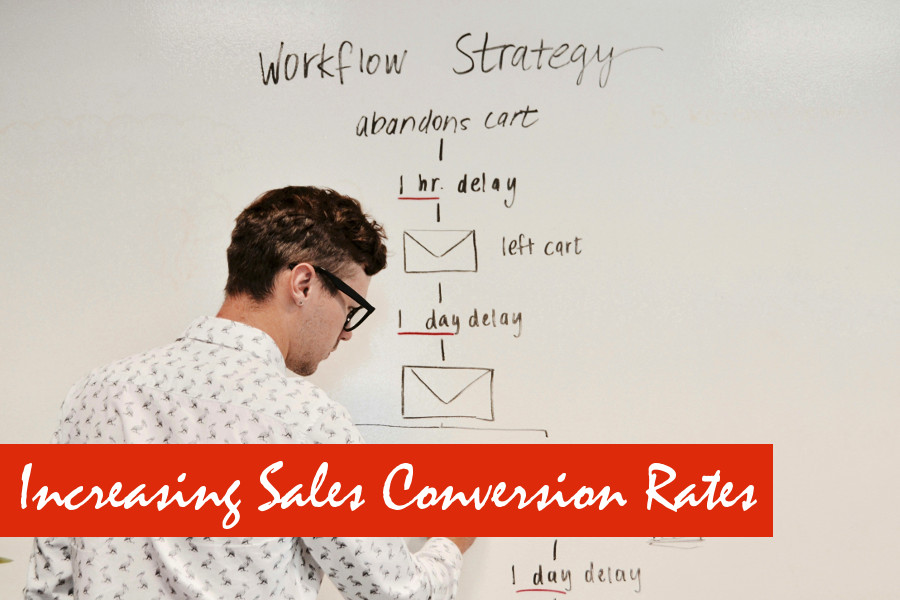
- Email abandoned cart reminders: Many customers abandon carts simply because they get distracted. Sending timely, personalized reminders can recover a significant portion of lost sales.
- Social media retargeting ads: Platforms like Facebook, Instagram, and TikTok allow you to show ads specifically to users who visited your store but didn’t purchase. These ads remind them of products they showed interest in.
- Offer discounts or incentives for returning customers: Small discounts, free shipping, or loyalty points can entice hesitant buyers to complete their purchase. Personalized follow-ups based on browsing behavior make offers more compelling.
These strategies work together to ensure that visitors who initially showed interest don’t slip away, maximizing your store’s revenue potential.
Conclusion
Increasing sales conversion rates is about understanding your customers’ behavior and optimizing every step of the buying journey. From attracting visitors to finalizing a purchase, every element of your online store plays a role in influencing decisions. By optimizing product pages with high-quality visuals and persuasive descriptions, improving website speed and mobile usability, simplifying checkout, crafting compelling copy, implementing A/B testing, providing trust signals, and using retargeting strategies, you can turn more visitors into paying customers.
The key is to treat CRO as an ongoing process rather than a one-time task. Continuous testing, monitoring, and tweaking your store will help you stay ahead of competitors and adapt to changing consumer expectations. Even small improvements can lead to significant increases in revenue, making your online store more profitable and sustainable over time.
By investing in conversion rate optimization, you not only increase sales but also create a smoother, more enjoyable experience for your customers - building loyalty and long-term growth for your business.